OHIO - Ohio, a state crisscrossed by mighty rivers like the Ohio, Miami, and Muskingum, has a long history of devastating floods. From localized flash floods to widespread riverine deluges, these events have repeatedly shaped its landscape and communities. Among these, one flood stands out as the most pervasive and destructive in the state's recorded history, causing unprecedented damage and altering urban planning: The Great Dayton Flood of 1913.
The Great Dayton Flood of 1913: A Disaster that Reshaped Ohio
The Great Dayton Flood was part of a larger system of severe flooding that impacted much of the Midwest, often referred to as the Great Flood of 1913. However, Dayton bore the brunt of the disaster, with consequences so severe that they led to a groundbreaking shift in flood control and urban infrastructure.
The Cause: The disaster was triggered by an extraordinary weather event. From March 23 to March 27, 1913, a massive storm system stalled over Ohio, dropping an average of 8 to 11 inches of rain across the Great Miami River watershed in just four days. This was equivalent to two months' worth of rainfall falling in less than 100 hours onto already saturated ground.
The Cataclysm: The Great Miami River, along with its tributaries, quickly swelled to unimaginable levels. On March 25, 1913, at 8:00 AM, the river crested at over 20 feet above flood stage in Dayton, overwhelming the city's levee system. The levees, built to withstand about 12 feet above flood stage, crumbled, and the river poured into the city.
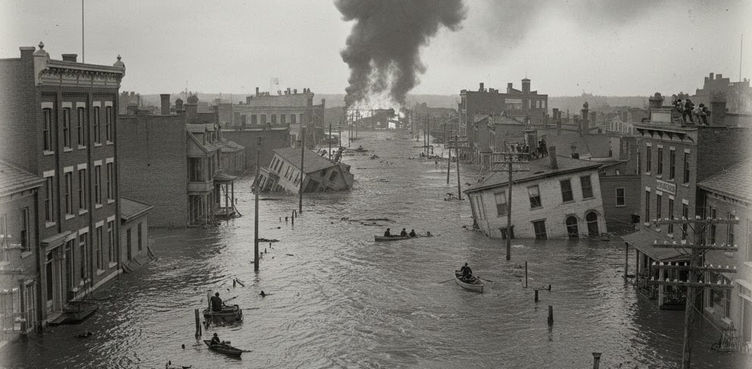
The Devastation: Water rushed through downtown Dayton at an estimated 10 to 12 miles per hour, reaching depths of up to 20 feet in many areas. Entire neighborhoods were submerged, houses were ripped from their foundations, and massive fires broke out in the flooded regions, further destroying the area.
Inundation: Over 70,000 homes were flooded, and entire blocks of the city center were underwater.
Rescue Efforts: Thousands were stranded on rooftops, requiring daring rescues by boat. The National Guard was called in to maintain order and assist with relief.
Unparalleled Loss and a Legacy of Innovation
The Great Dayton Flood left an indelible mark on Ohio, forcing a paradigm shift in how communities approached flood control.
Fatalities: The official death toll in Dayton was 360 people, though some estimates suggest the number could have been higher. This made it one of the deadliest floods in U.S. history.
Property Damage: The economic damage was staggering. In Dayton alone, the estimated damage was over $100 million (in 1913 dollars), equivalent to billions today. This included the destruction of homes, businesses, and critical infrastructure.
Statewide Impact: The flood affected other Ohio cities, including Columbus, Zanesville, and Piqua, but Dayton suffered the most extensive and concentrated destruction.
The Birth of Modern Flood Control: The disaster led directly to the formation of the Miami Conservancy District, which raised $30 million through a special assessment district—an unprecedented feat for its time. This district designed and implemented a comprehensive flood control system, including a series of five massive dry dams and channel improvements, that is still in use today and has successfully prevented a repeat of the 1913 flood. It became a model for flood control engineering across the nation.
The Great Dayton Flood of 1913 was a tragedy that reshaped a city and spurred innovations that protected millions. It remains Ohio's most catastrophic flood, not only for its immediate devastation but for its profound, lasting impact on infrastructure and public safety.
What Was The Most Catastrophic Flood in Ohio History?
The Fury of the Waters: Ohio's Most Catastrophic Flood
Typography
- Smaller Small Medium Big Bigger
- Default Helvetica Segoe Georgia Times
- Reading Mode