NEW JERSEY - New Jersey, a state shaped by its rivers and coastline, has endured countless battles against the forces of nature. From coastal storms to riverine deluges, floods have repeatedly tested the resilience of its communities. While numerous events have left their mark, one stands out as the most widespread and devastating flood in the state's recorded history: Hurricane Floyd in 1999.
Hurricane Floyd, September 1999: A Widespread Deluge
While not the most powerful hurricane to hit the coast, Hurricane Floyd's impact was uniquely catastrophic due to its slow movement, massive size, and the timing of its rainfall over already saturated ground.
- The Set-up: In the weeks leading up to Floyd, New Jersey had already experienced an unusually wet summer, with persistent rainfall saturating the ground and leaving rivers and reservoirs at higher-than-normal levels. Hurricane Dennis had also swept through just a week earlier, dropping additional rain and ensuring the state was primed for disaster.
- The Storm's Path: Hurricane Floyd made landfall in North Carolina as a Category 2 hurricane on September 16, 1999. It then tracked up the East Coast as a powerful tropical storm, impacting New Jersey on September 16, 1999.
- The Deluge: While not making a direct "landfall" in New Jersey as a hurricane, Floyd dumped an astonishing amount of rain on the state. Many areas received between 6 and 12 inches of rain in less than 24 hours, with some localized spots reporting over 15 inches. This massive influx of water had nowhere to go.
- Widespread River Flooding: The torrential rainfall caused nearly every major river basin in the central and northern parts of the state to overflow its banks simultaneously. The Raritan, Millstone, Passaic, Delaware, and Hackensack Rivers, along with their numerous tributaries, swelled to unprecedented levels. Many areas saw flood crests that shattered previous records, including those set by Hurricane Agnes in 1972.
Unparalleled Impact and Cost
Hurricane Floyd's legacy in New Jersey is defined by its extensive geographical reach and the immense disruption it caused.
- Fatalities: While far fewer than the Johnstown Flood, Floyd tragically caused six deaths in New Jersey, primarily due to drowning in floodwaters.
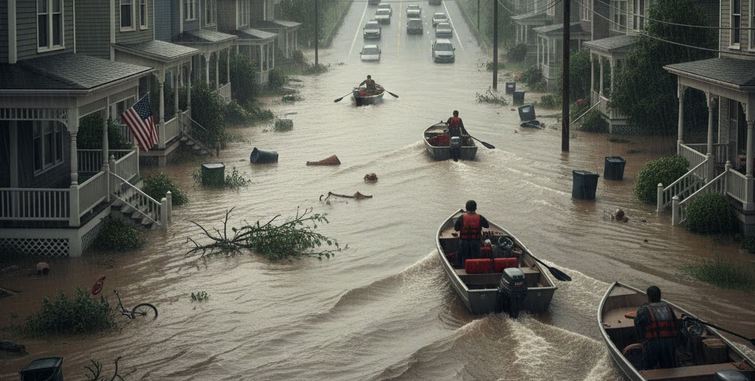
- Displacement: Over 10,000 people were forced to evacuate their homes, with many rescued from rooftops and stranded vehicles. Thousands of homes and businesses were inundated.
- Economic Damage: The estimated damage to New Jersey alone was well over $250 million (in 1999 dollars), making it one of the costliest natural disasters in the state's history. This included damage to homes, businesses, infrastructure (roads, bridges, utilities), and agricultural lands.
- Infrastructure Collapse: Major roadways, including parts of the New Jersey Turnpike, Route 1, Route 29, and numerous local roads, were submerged entirely and impassable for days, crippling transportation. Train services were also severely disrupted.
- Environmental Impact: Massive overflows from wastewater treatment plants contaminated rivers, posing significant public health and environmental hazards.
A Lasting Legacy
Hurricane Floyd served as a brutal wake-up call for New Jersey. The widespread devastation led to renewed focus on flood mitigation, improved early warning systems, stricter building codes in floodplains, and significant investment in stormwater management infrastructure. While more intense storms have impacted the state (like Superstorm Sandy's coastal surge), Floyd remains unparalleled for the sheer geographical breadth and severity of its riverine flooding, making it New Jersey's most catastrophic flood from a statewide inland perspective.
What Was The Most Catastrophic Flood in New Jersey History?
What Was The Most Catastrophic Flood in New Jersey History?
Typography
- Smaller Small Medium Big Bigger
- Default Helvetica Segoe Georgia Times
- Reading Mode