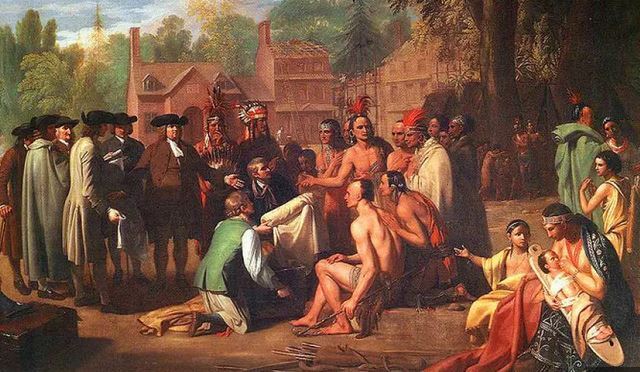
NEW JERSEY - Before the Dutch and English gave it their names, the land of New Jersey was the heart of a vast indigenous civilization. Because New Jersey is the only state in the U.S. entirely encompassed by the ancestral homeland of a single people—the Lenape—its indigenous history is remarkably cohesive. To the people who lived here for over 10,000 years, the land was not a "state" but a sacred, living landscape defined by the "Great Water" of the Atlantic and the river that bore their name.
Lenapehoking: The Land of the Original People
The entire region of New Jersey, along with parts of New York, Pennsylvania, and Delaware, was known as Lenapehoking. This translates directly to "Land of the Lenape" or "Land of the Original People." The Lenape were the "Grandfathers" of the Algonquian nations, the cultural root from which many other tribes grew. They viewed the geography of New Jersey as three distinct regions based on their dialects:
- Munsee (The North): Inhabited the rugged highlands and the Palisades. Their name translates to "People of the Stony Country."
- Unami (The Center): Occupied the fertile plains and river valleys. Their name translates to "People Downriver."
- Unalachtigo (The South): Lived along the southern coast and Delaware Bay. Their name translates to "People Near the Ocean."
Scheyichbi: The Land of the Shell Money
While "Lenapehoking" referred to their entire territory, the specific land that comprises modern-day New Jersey was often called Scheyichbi (pronounced Shay-ik-bee).
This name roughly translates to "The Land of the Long Water" or "The Place of the Shell Money" (Wampum). This is a direct reference to the Jersey Shore, which was the world's primary source for the white and purple shells used to create the beads that functioned as currency, diplomatic records, and sacred jewelry across North America.
Major Landmarks and Their Original Names
The map of New Jersey is a layer of English names on top of a deep indigenous foundation:
- Lenape Sipu: The original name for the Delaware River. It was the main artery of their civilization.
- Manhattan: While we associate this with the city, the name originated from the Munsee word Mannahatta, meaning "Island of Many Hills," which included parts of the northern Jersey shoreline.
- Passaic: Derived from the word Pasaeck, meaning "Valley" or "Place where the land forgets."
- Raritan: Named for the Raritan tribe, the word likely translates to "Stream Overflows" or "Forked River."
- Watchung: A Munsee word meaning "High Hills" or "Mountainous Place."
Living Etymology: Names You Know
Many of New Jersey's most famous locations are descriptive markers of the terrain as seen through Lenape eyes:
- Hackensack: From Achkinheshaky, meaning "Place of Sharp Ground" or "Mouth of a River."
- Hoboken: From Hopoghan Hackingh, meaning "Land of the Tobacco Pipe," referring to the stone found there that was ideal for carving pipes.
- Kittatinny: The name for the Blue Mountain ridge in the northwest, meaning "The Endless Mountain."
- Absecon: From Absegami, meaning "Little Water" or "Place of Swans," which eventually became "Absecon" and the foundation for Atlantic City.
- Wanaque: Meaning "Place of Sassafras."
 New Jersey’s indigenous legacy is one of industrial and maritime mastery. From the "Land of the Tobacco Pipe" to the "Land of the Shell Money," the names left behind prove that the Lenape saw the state not just as a home, but as a specialized source of the resources that fueled the entire Eastern Seaboard.