VIRGINIA STATE - Long before the Susan Constant, the Godspeed, and the Discovery arrived in 1607, the land that became the Commonwealth of Virginia was a highly organized collection of sovereign territories. Because "Virginia" was a name chosen by English explorers to honor Queen Elizabeth I, there was no single indigenous word for the entire state. Instead, the land was defined by three distinct linguistic groups: the Algonquian, the Siouan, and the Iroquoian.
Tsenacommacah: The Land of the Powhatan
The coastal plain and Tidewater region—stretching from the Potomac River to the North Carolina border—was known to its inhabitants as Tsenacommacah. This Algonquian term translates to "Densely Inhabited Land" or "Our Land."
This territory was the seat of the Powhatan Confederacy, a powerful alliance of over 30 tribes led by Wahunsenacawh (the father of Pocahontas). To the Powhatan people, the land was a gift from the creator, defined by the "Great Water" (the Chesapeake) and the four major rivers that served as their highways.
- Attamoock: The original name for the Potomac River, meaning "The Great River" or "Place of the Traders."
- Paspahegh: The area surrounding Jamestown, named after the tribe that lived there.
- Chesapeake: Derived from Chesepiooc, meaning "Great Shellfish Bay."
The Monacan: People of the Piedmont
As the terrain rises into the rolling hills of the Piedmont (the central part of the state), the language changed from Algonquian to Siouan. This was the territory of the Monacan Indian Nation.
- Monacan: While the exact translation is debated, some linguists believe it stems from an Algonquian word meaning "Diggers of the Earth," likely referring to the nation's expertise in copper mining and stone construction.
- Saponi: A related Siouan people whose name likely translates to "People of the Shallow Water."
- Occaneechi: Known as the "Great Traders" of the Piedmont, their name refers to "People of the Island," specifically their base on an island in the Roanoke River.
The Mountains and the South: Cherokee and Meherrin
The western mountains and the southern borders were the domain of Iroquoian-speaking nations.
- Shenandoah: One of the most famous names in the state, believed to be an Oneida word meaning "Daughter of the Stars." It refers to the massive valley nestled between the Blue Ridge and the Alleghenies.
- Meherrin: This name translates to "People of the Muddy Water." They inhabited the southern borderlands along the Meherrin River.
- Nottoway: The name given to them by their Algonquian neighbors, meaning "Adders" or "Snakes," though they called themselves the Cheroenhaka ("People at the Fork of the Stream").
Living Etymology: Virginia’s Indigenous Map
The names of Virginia’s cities, counties, and natural landmarks serve as a permanent record of the people who managed this landscape for millennia:
- Appomattox: Derived from an Algonquian word meaning "A Tidal River" or "A River that Bends."
- Roanoke: An Algonquian term for "Shell Money" or "White Beads" (wampum), reflecting the area’s importance in regional trade.
- Nansemond: Translates to "Fishing Point" or "Point of Departure."
- Accomac: From the word Akkawamut, meaning "On the Other Side of the Water" (referring to the Eastern Shore).
Virginia’s indigenous history is a story of three distinct worlds meeting in one geographic space. The names that remain reflect a deep understanding of the environment—from the "Great Water" of the coast to the "Endless Mountains" (the Kittatinny) of the west.
What Native Americans Called Virginia?
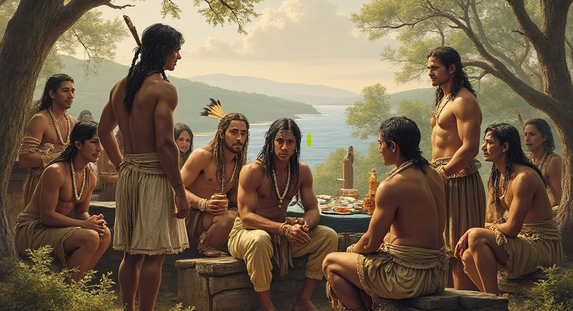
What Native Americans Called Virginia?
Typography
- Smaller Small Medium Big Bigger
- Default Helvetica Segoe Georgia Times
- Reading Mode