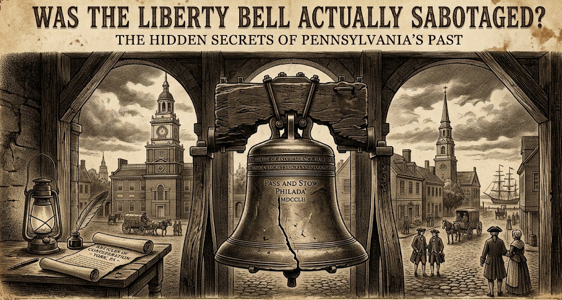
PENNSYLVANIA - We all know the story: the Liberty Bell rang out to celebrate American independence, developed a massive crack, and became a symbol of freedom. But what if the story we were taught in grade school is only half true?
From "lost" state capitals to the strange reason we aren't technically a "state," Pennsylvania’s history is packed with mysteries that even lifelong residents get wrong. As we navigate the changing landscape of 2026, it’s worth looking back at the enigmas that defined the Keystone State.
1. The Liberty Bell: Iconic Symbol or 18th-Century "Lemon"?
The most famous crack in the world didn't actually happen in 1776. In fact, the bell was a bit of a disaster from the start.
- The First Crack: When it arrived from London in 1752, it cracked on its very first test ring.
- The "Fix": Local craftsmen John Pass and John Stow melted it down and added more copper to make it less brittle. The result? It sounded terrible. They had to melt it down again.
- The Mystery: The final, famous crack that silenced the bell forever didn't appear until the mid-1800s. Some historians argue it wasn't just "wear and tear"—was the metal composition inherently flawed, or was it handled improperly during a funeral procession for Chief Justice John Marshall? We may never truly know if the bell was ever "perfect."
2. Why Are We a "Commonwealth" and Not a State?
You see it on every official document: The Commonwealth of Pennsylvania. But have you ever stopped to ask why?
Only four states in the U.S. use this designation (PA, MA, VA, and KY). In 1776, the term "Commonwealth" was a political statement. It was a middle finger to the British Monarchy, signifying a government "founded on the authority of the people" rather than a royal charter. While there is no legal difference between a commonwealth and a state today, the title remains a badge of our revolutionary DNA.
3. The "Lost" Capitals: Did You Know Harrisburg Wasn't First?
If you think Philadelphia was the only other capital, think again. During the Revolutionary War, the Continental Congress had to stay one step ahead of the British, leading to some surprising "capitals for a day."
- Lancaster: For exactly one day (September 27, 1777), Lancaster was the capital of the United States.
- York: The Congress then moved across the Susquehanna to York, where they stayed for nine months and actually adopted the Articles of Confederation.
4. The World’s First Oil Well… in the Middle of Nowhere?
When people think of oil, they think of Texas or the Middle East. But the global petroleum industry was actually born in Titusville, PA. In 1859, Edwin Drake struck "black gold," changing the course of human history forever. Pennsylvania was the "Oil Capital of the World" long before the first skyscraper ever touched the Philly skyline.
The Big Question: What’s Next for the Keystone State?
Pennsylvania has survived wars, industrial collapses, and the birth of a nation. As we look at the state today—from the bustling streets of Philadelphia to the quiet mountains of the Alleghenies—we have to wonder: What will historians say about us 100 years from now?
Will we be remembered for our culinary icons, our tech revolutions, or our resilience in a shifting economy?
Was the Liberty Bell Actually Sabotaged? The Hidden Secrets of Pennsylvania’s Past
The Hidden Secrets of Pennsylvania’s Past
Typography
- Smaller Small Medium Big Bigger
- Default Helvetica Segoe Georgia Times
- Reading Mode