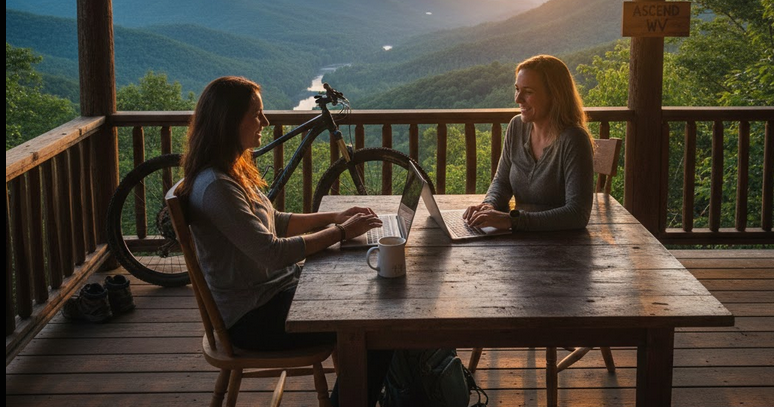
The old dream was to work until 65 and then see the world. But in 2026, the "Micro-Retirement" has officially gone mainstream. Tired of the corporate grind but not ready to hang it up for good, a new wave of mid-career professionals is hitting the pause button for 4–8 weeks of immersive "slow travel." Their destination of choice? West Virginia. With a cost of living nearly 15% below the national average and a rugged landscape that feels worlds away from a Zoom call, the Mountain State is becoming the capital of the American Sabbatical.
The "Mid-Career Pause": It's Not a Vacation, It's a Life Reset
 Unlike a frantic one-week vacation, a micro-retirement in West Virginia is about living in the mountains, not just visiting them. In 2026, the rise of "First Ascent" programs and remote-work hubs has paved the way for travelers to swap their cubicles for cabins without losing their professional edge.
With median monthly housing costs for long-term rentals sitting significantly lower than coastal hubs, travelers are finding they can live a "luxury" lifestyle in the Appalachians for a fraction of their normal rent.
The Sabbatical Hubs: Where to "Retire" for a Month
1. Davis & Thomas: The "Cool-Town" Collective High in the Allegheny Mountains, these twin towns offer the ultimate micro-retirement vibe.
- The Draw: Thomas is a haven for artists and musicians, while Davis serves as the gateway to Blackwater Falls.
- The Lifestyle: Spend your mornings working from a local gallery-cafe and your afternoons hiking the canyon. The social scene here is built on "slow living," making it easy for outsiders to plug in for a month.
2. Lewisburg: The Sophisticated Escape Voted one of the "Coolest Small Towns in America" year after year, Lewisburg is for the micro-retiree who wants culture with their climbing.
- The Draw: Home to a Carnegie Hall (one of only four in the world still in use) and a vibrant downtown.
- The Lifestyle: It’s a place where you can spend weeks exploring the Greenbrier Valley by bike, attending independent film screenings, and enjoying farm-to-table dining that rivals any major city.
Bucket-List "Work-Stays" You Can Actually Afford
The secret to a successful micro-retirement is the "home base." West Virginia’s 2026 rental market has adapted to this trend, offering sabbatical-ready properties that cater to longer stays. From refurbished fire towers where you can literally live above the trees to luxury log cabins with high-speed fiber-optic internet, the options for a scenic "office" are endless. Many hosts now offer deep discounts for 30-day bookings, making that mountain-view porch more affordable than a studio apartment in D.C. or New York.
The "First Ascent" Factor
West Virginia isn't just letting this happen; they are encouraging it. Programs like Ascend WV have proven that people want to be here, and the state has doubled down on outdoor infrastructure. For a mid-career traveler, this means world-class mountain biking trails, refurbished "Rail-to-Trail" paths, and reliable connectivity even in the heart of the Monongahela National Forest.
The budget works, too. By leveraging local farmers markets and enjoying the abundance of free-access state parks, a single professional can often live more comfortably during their "retirement month" than they do during their normal working year.
The verdict is in: You don't need a million dollars to retire. You just need a month, a mountain, and a West Virginia zip code.