MARYLAND - Maryland has been repeatedly battered by powerful storms, leading to coastal surges along the Chesapeake Bay and devastating riverine flooding inland. While events like Hurricane Floyd (1999) caused extensive damage, the most historically significant and deadliest disaster from a named storm in the state remains Tropical Storm Agnes in 1972.
The Deadliest Named Storm: Tropical Storm Agnes
Tropical Storm Agnes, which began as a hurricane, is considered the deadliest named storm to strike Maryland in modern history and one of the costliest disasters up to that time.
The Cause: In late June 1972, Agnes dumped an astonishing amount of rain over the Mid-Atlantic. Maryland received between 8 and 18 inches of rain over 10 days. This was compounded by already saturated soil and the subsequent massive influx of water from the swollen Susquehanna River watershed.
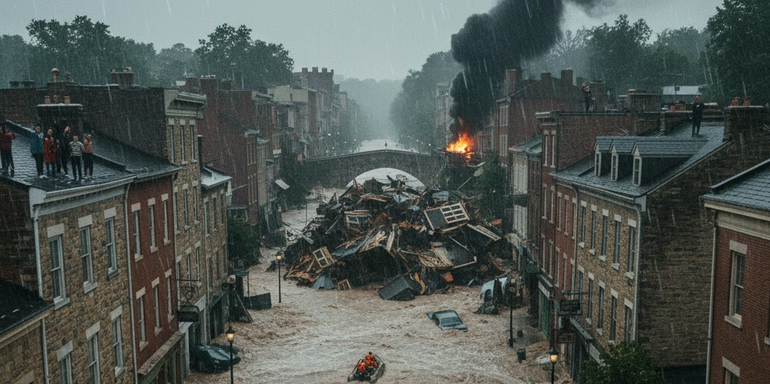
Widespread Impact: Agnes affected 20 of Maryland's 23 counties and Baltimore City, causing massive riverine flooding, particularly along the Patapsco River (including Ellicott City) and its tributaries.
The Toll: Agnes caused 21 fatalities in Maryland, primarily due to drowning. Statewide damage estimates exceeded $110 million (in 1972 dollars).
Long-Term Ecological Disaster
The effects of Agnes were not limited to human infrastructure; the storm imposed lasting, devastating damage on the Chesapeake Bay's ecosystem.
Sedimentation and Pollution: The massive amounts of rainfall brought on by Agnes transported an estimated 31 million metric tons of sediment—equivalent to what the Susquehanna River typically discharges over a quarter century—into the Bay in just ten days.
Decimated Marine Life: The colossal influx of freshwater drastically lowered the Bay's salinity levels to unprecedented lows, proving fatal for many saltwater organisms. The oyster population in the upper Bay suffered a nearly 100% mortality rate, and soft-shell clams were also severely impacted. Many experts agree that these species and the vital underwater seagrass meadows have never fully recovered to pre-Agnes levels.
Context: The Black Friday Flood and Modern Disasters
While Agnes caused broader financial and ecological damage, other floods hold records for concentrated destruction:
The Black Friday Flood (1868): This disaster holds the record for the deadliest single flood event in Baltimore's history, claiming approximately 50 lives when the Jones Falls overflowed.
Ellicott City Floods (2016 & 2018): These recent, catastrophic flash floods, while causing fewer fatalities than 1972, resulted in immense, concentrated destruction along the Patapsco River and Main Street, forcing significant, costly mitigation efforts.
Conclusion: Tropical Storm Agnes remains the deadliest named storm disaster in Maryland history, defined by its massive loss of life and profound, decades-long impact on the Chesapeake Bay.
You can see the long-term impact of these floods on river towns in this video: Agnes devastated Maryland river towns (Part 1). This video provides context on how Hurricane Agnes destroyed Maryland river towns and led to the formation of Historic Ellicott City.
What Was The Most Catastrophic Flood in Maryland History?
What Was The Most Catastrophic Flood in Maryland History?
Typography
- Smaller Small Medium Big Bigger
- Default Helvetica Segoe Georgia Times
- Reading Mode