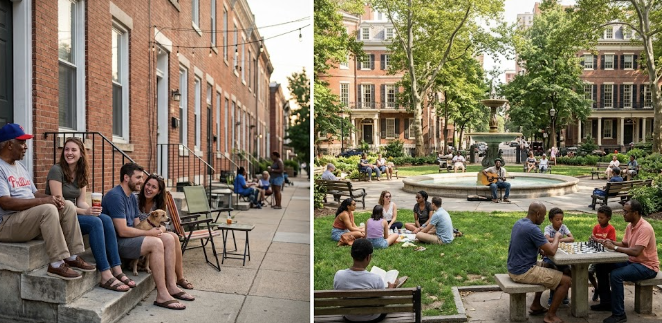
PHILADELPHIA - Here at PhillyBite Magazine and WherePhilly, we spend a lot of time exploring what makes the city's diverse neighborhoods tick. Beyond the incredible local food scene, one standout feature is Philadelphia's distinct porch-and-park culture. In this city, stoops, historic squares, and front steps actively function as communal living rooms, setting it apart from other major American metropolises.
The Stoop as a Social Anchor
Unlike cities where high-rise balconies or fenced-in suburban backyards dominate the landscape, Philadelphia's historic rowhouse architecture pushes daily life directly to the street level.
- The Rowhouse Effect: The continuous, narrow layout of connected homes naturally encourages residents to interact daily.
- Stoop Sitting: Gathering on the front steps is a multi-generational tradition for sharing local news, keeping an eye on the block, and enjoying a summer evening.
- Block Party Spirit: This accessible, street-facing setup easily evolves into frequent, informal block gatherings and officially permitted street festivals.
Public Squares Over Private Retreats
While sprawling metros like Los Angeles prioritize private, gated outdoor spaces, Philadelphia utilizes its historic grid of public parks as shared communal backyards.
- William Penn's Vision: The original city layout famously included five public squares, establishing a lasting legacy of shared, accessible green space.
- Rittenhouse and Washington Square: These central areas act as massive neighborhood patios where diverse groups gather to read, eat, and socialize under the canopy.
- Neighborhood Parks: Hubs like Clark Park in West Philly regularly host farmers' markets, theatrical performances, and everyday community meetups.
A Contrast in Urban Design
Compared with the car-centric layouts of Sunbelt cities or the vertical isolation of New York City's soaring high-rises, Philadelphia strikes a unique, highly social balance.
- Human Scale: The low-rise density keeps "eyes on the street" and fosters a localized, village-like atmosphere within a massive city.
- Walkability: Seamless transitions from stoop to sidewalk to public square encourage spontaneous interactions and chance encounters.
- Community Fabric: The distinct lack of physical barriers between homes builds a tighter, more resilient neighborhood fabric.
Philadelphia's outdoor spaces are not just charming architectural features; they are the very foundation of the city's renowned neighborhood pride and communal identity.
 Share This Article on Social Media
Which Philadelphia park or neighborhood block do you think best exemplifies this unique communal spirit?