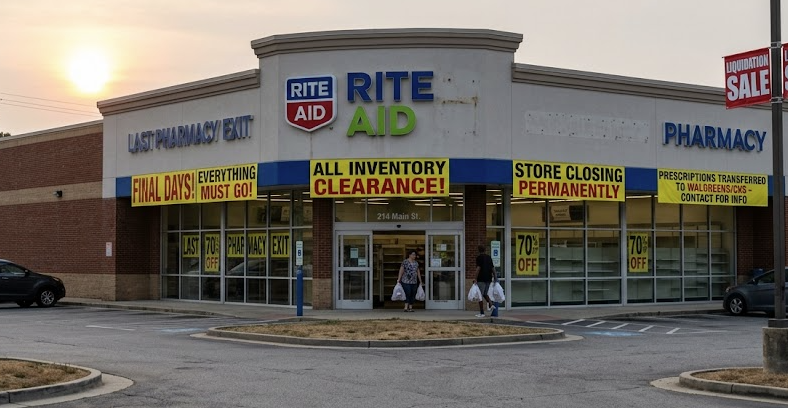
SOUTH CAROLINA STATE - The South Carolina pharmacy landscape is undergoing a permanent transformation this June as Rite Aid reaches the final chapter of its liquidation process. After more than six decades as a staple of American retail, the Philadelphia-based chain is shuttering its remaining physical storefronts, marking the end of an era for neighborhood healthcare in the Palmetto State.
The withdrawal follows a tumultuous period for the retailer, which filed for Chapter 11 bankruptcy for a second time in May 2025. Despite restructuring efforts in 2024, the company was unable to navigate the "perfect storm" of high debt, intense competition from big-box retailers, and the legal weight of legacy opioid litigation. When no buyer for the entire enterprise emerged, the court moved toward total liquidation.
The Mid-June Sunset
For shoppers and patients across South Carolina, the transition is reaching its peak. Final inventory clear-outs are currently underway, with deep discounts on remaining merchandise as stores prepare for permanent closure.
- Timeline: All brick-and-mortar operations and building handovers are slated for completion by mid-June 2026.
- Inventory: Clearance sales are entering their final stages, with fixtures and shelving often sold alongside remaining front-end goods.
- Prescription Transfers: To ensure no gap in patient care, Rite Aid has been systematically transferring prescription records to competing chains, primarily Walgreens and CVS.
Impact on Local Communities
Rite Aid's departure leaves a significant hole in the local retail fabric. In metropolitan hubs like Columbia, Charleston, and Greenville, the closures mean prominent vacancies at busy intersections. However, the impact is felt most acutely in smaller community centers where Rite Aid often served as the primary—or only—accessible pharmacy.
"For sixty years, Rite Aid was woven into the daily life of millions," the company noted in a recent message to customers. "The pharmacist knew your name... that kind of presence in a community isn't just a retail footprint. It's a relationship."
Navigating the Transition
While the physical stores are disappearing, the company has maintained digital resources for former patients. South Carolinians affected by the closures can still access their medical history and vaccination records via the Rite Aid website.
As the last neon signs are dimmed this month, the focus shifts to the future of these real estate assets. While discount retailers have picked up some leases, many of the iconic corner buildings remain vacant, waiting for the next era of South Carolina commerce to begin.