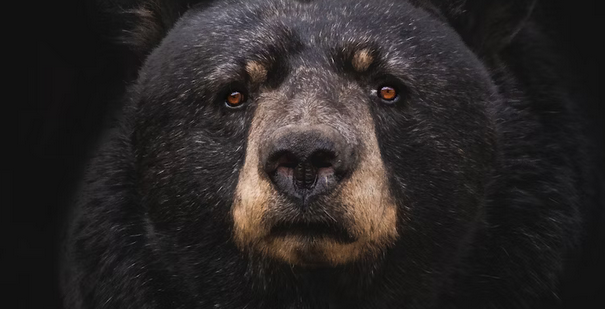
VERMONT STATE - If you’ve spent time in the Green Mountains lately, you’ve likely noticed that Vermont is currently home to more bears than at any point since before European settlement. As of March 2026, state wildlife biologists estimate the population has surged to between 6,800 and 8,000 bears—nearly double the state’s long-term management objective of 3,500 to 5,500 animals.
While Vermont has always been "bear country," the current explosion in numbers is the result of a massive shift in how these animals live, eat, and reproduce in a rapidly changing landscape.
1. The "Valley Buffet" Effect
Historically, Vermont’s bears were largely confined to the "spine" of the Green Mountains and the Northeast Kingdom, where they relied on beechnuts as their primary fall food source. However, beechnut production is notoriously inconsistent, pulsing only every two or three years.
In recent years, bears have increasingly moved out of the high-elevation forests and into the Connecticut and Champlain Valleys. In these lower elevations, they have discovered a much more consistent and high-calorie "buffet":
- Acorns and Agriculture: Oak trees in the valleys provide a more stable food source than beech trees, and proximity to agricultural corn fields offers a high-protein supplement that keeps bears healthy year-round.
- Habitat Recovery: With Vermont now roughly 80% forested, the state has provided a "green highway" that allows bears to reclaim territory they haven't occupied in over a century.
2. The Rise of the "Super-Litter"
One of the most telling signs of the population boom is the size of new litters. Vermont Fish & Wildlife biologists are increasingly documenting sows with three or four cubs, whereas a litter of two was once the standard.
When bears are well-nourished, they reach reproductive maturity earlier and can produce larger litters more frequently. This reproductive success has created a "snowball effect"—even with record hunter harvests exceeding 1,000 bears in both 2024 and 2025, the population has continued to climb because the survival rate of these "super-litters" remains remarkably high.
3. Shorter Winters and the "Early Riser" Phenomenon
Climate change is fundamentally altering bear behavior in the North Country. Shorter, milder winters mean that bears are entering their dens later in the fall and emerging much earlier in the spring.
In 2026, bear activity was reported as early as mid-March—roughly two weeks sooner than the traditional start of the season. This extended active period gives bears more time to forage, but it also increases the window for human-bear conflict. When bears emerge early, natural food sources like berries and nuts aren't yet available, driving them straight into residential yards in search of an easy meal.
4. The Composting and Habituation Crisis
Vermont’s commitment to sustainability has inadvertently fueled the bear boom. Specifically, the state’s universal recycling and composting laws have created a new set of challenges:
- Unsecured Compost: While environmentally friendly, residential food scrap piles are high-value targets for bears. A bear that finds a meal in a compost bin quickly becomes "habituated," losing its natural fear of humans.
- Generational Learning: Biologists have noted that habituation is being passed down. Sows are now teaching their cubs that backyards—complete with bird feeders, grills, and trash cans—are safer and easier places to eat than the deep woods.
The prosperity of Vermont’s black bears is, in many ways, a rare conservation success story. However, it has placed the state in a difficult position. With the population nearly 100% above the target goal, the focus has shifted from "saving the bears" to "managing the conflict." Until human habits around food waste and attractants change as quickly as the bear population has grown, the "Green Mountain Boom" will remain a front-page story.
Pro Tip: Vermont wildlife officials recommend taking down bird feeders by March 15th and using electric fencing for backyard chickens—standard wood or wire fences are rarely enough to deter a hungry 300-pound visitor.