MICHIGAN STATE - While Michigan is known today for its Great Lakes and industrial might, its history extends back thousands of years through a lineage of powerful confederacies and ancient engineers. The story of Michigan’s first people is one of vast trade networks, spiritual prophecy, and a deep connection to the "inland seas."
Ancient Ancestors: The Hopewell and Beyond
Long before the tribes known to modern history emerged, Michigan was home to the Hopewell culture (approximately 100 BCE to 500 CE). Like their neighbors in the Ohio Valley, these people were master earthwork builders.
In Michigan, the Hopewell influence is most visible in the Grand River Valley. These ancestors were part of a massive "Hopewell Exchange" trade network that brought copper from Lake Superior as far south as the Gulf of Mexico.
- Norton Mounds: Located near Grand Rapids, this is one of the best-preserved Hopewellian sites in the Great Lakes, featuring a series of burial mounds that once held intricate pottery and copper tools.
- The Great Mound of the River Rouge: Once located in the Detroit area, this massive structure was hundreds of feet long before it was destroyed by urban development in the 19th century.
The Council of Three Fires
The most defining political and cultural force in Michigan’s history is the Anishinaabe (meaning "Original People"). According to oral tradition, they migrated from the Atlantic coast, following a prophecy to find the place "where food grows on the water" (wild rice).
Upon reaching the Great Lakes, they formed the Council of Three Fires (Niswi-mishkodewinan), a powerful confederacy that exists to this day.
1. The Ojibwe (Chippewa)
Known as the "Keepers of the Faith," the Ojibwe are the "Older Brother" of the council. They traditionally inhabited the Upper Peninsula and northern Lower Peninsula. They were renowned for their birchbark canoes and their role in preserving the sacred scrolls and traditions of the Anishinaabe.
2. The Odawa (Ottawa)
The "Keepers of the Trade" are the "Middle Brother." Based largely around the Straits of Mackinac and the shores of Lake Michigan, the Odawa were elite merchants and navigators. They managed the vast trade routes that connected the Great Lakes to the rest of the continent.
3. The Potawatomi (Bodéwadmi)
The "Keepers of the Fire" are the "Younger Brother." They primarily settled in Southern Michigan. Their name refers to their responsibility for maintaining the council’s sacred fire. They were skilled farmers who cultivated large fields of corn, beans, and squash.
Other Significant Nations
While the Three Fires were the primary occupants, other nations played vital roles in Michigan’s landscape:
- The Wyandot (Huron): After being displaced from Ontario by conflicts in the 1600s, many Wyandot settled in the Detroit area. They were key allies and trade partners in the region.
- The Miami: In the early historic period, the Miami people occupied parts of Southwest Michigan before moving further south into Indiana and Ohio.
Life on the Great Lakes
The indigenous people of Michigan developed a lifestyle perfectly tuned to the seasons of the peninsula.
- Manoomin (Wild Rice): The "food that grows on water" was a staple of the diet, harvested by canoe in the shallow lakes and rivers.
- Copper Mining: Thousands of years before modern mining, Native peoples extracted pure copper from the Keweenaw Peninsula, hammering it into tools and decorative items that have been found across North America.
- The Birchbark Canoe: This was the "technological marvel" of the Great Lakes. Light enough to be carried (portaged) between lakes but sturdy enough to handle the rough waters of Lake Superior.
Resistance and Sovereignty
In the 18th and 19th centuries, Michigan’s tribes led major resistance movements against colonial expansion. Most notably, the Odawa leader Chief Pontiac organized a massive uprising in 1763 to expel British forces from the Great Lakes region, culminating in a famous siege of Detroit.
Despite being forced to cede millions of acres through various treaties, the Anishinaabe never left. Today, Michigan is home to 12 federally recognized tribes that operate as sovereign nations, continuing to protect the waters and traditions of their ancestors.
A Lasting Name: The word "Michigan" itself is derived from the Ojibwe word mishigami, meaning "large water" or "great lake."
Who Where The Native Peoples of Michigan State?
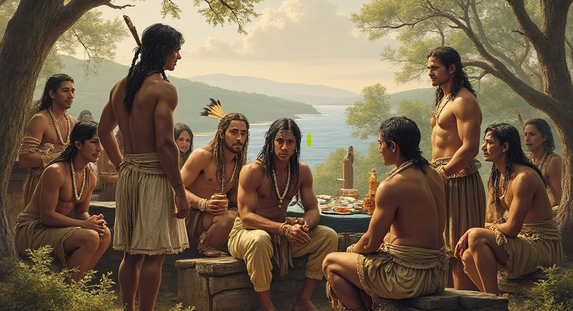
Who Where The Native Peoples of Michigan State?
Typography
- Smaller Small Medium Big Bigger
- Default Helvetica Segoe Georgia Times
- Reading Mode